
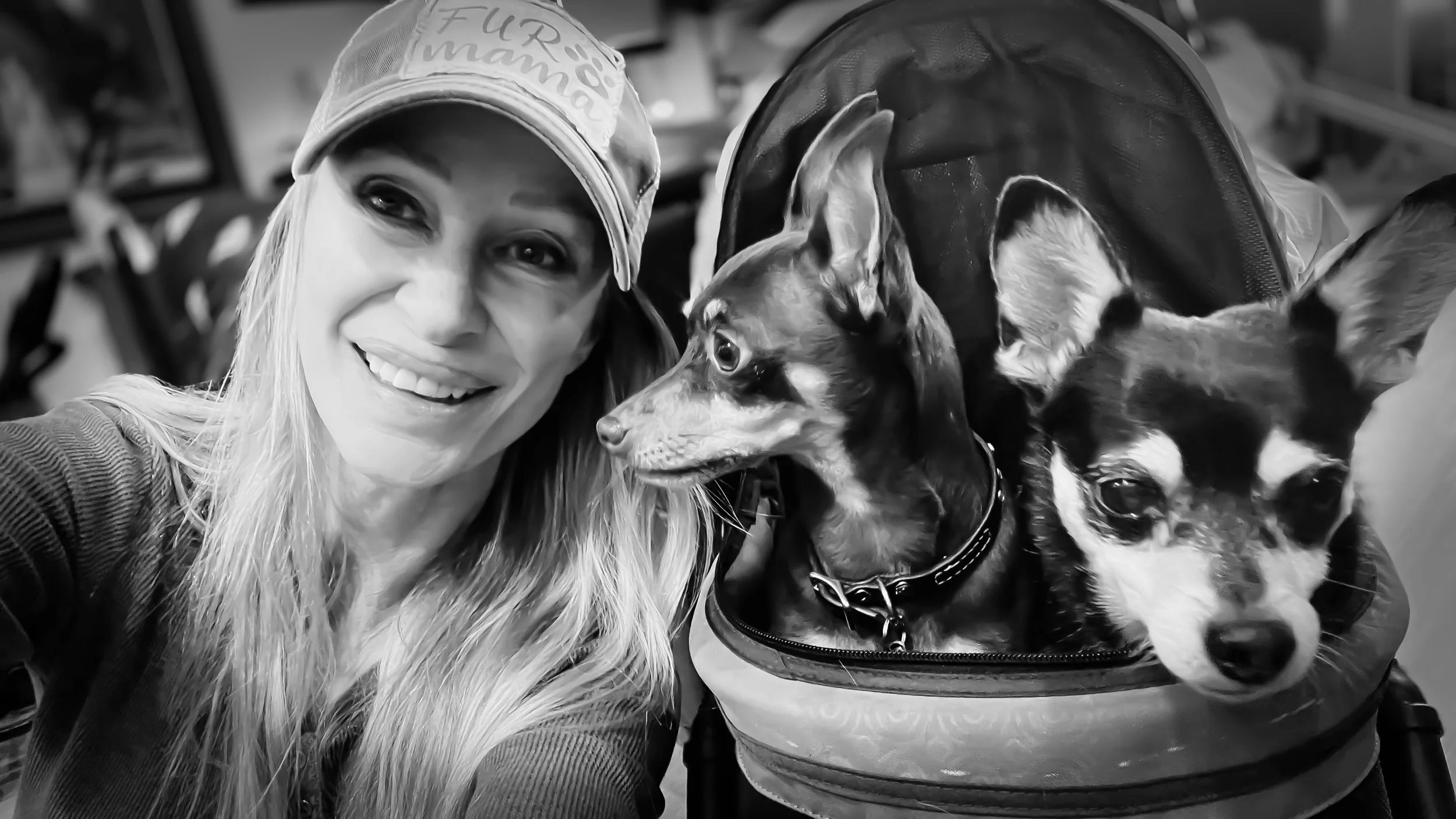
Read OurFOUNDER’S LETTER
Founder’s Letter
There wasn’t one single moment that led me here, but years of accumulation, moments that settled into my bones and refused to leave.
One of them happened while filming in Africa, standing quietly as a herd of elephants moved around me, mothers and babies close together, calm, aware, accepting. I remember thinking how extraordinary, and undeserved that acceptance was. These are deeply intelligent, emotional, spiritual beings, and yet they allowed us into their space despite everything humans have done to them. The poaching, the land loss, the violence. I felt awe, gratitude, and shame all at once.
The other moment came much closer to home. Back in Los Angeles, I saw a group of local children stone a bird to death and then laugh. I did’t realize what they had done till it was too late. That moment shook me in a way I can’t fully explain. It wasn’t just about the bird. It was about what we are teaching our children. About how far we have drifted from empathy, from responsibility, from understanding our place in the natural world.
That same disconnection shows up closer to home in other ways as well. In the United States, we are slaughtering our wild horses, symbols of freedom and resilience, while also treating domestic horses, once loved and trusted, as disposable when they are no longer useful or profitable. Animals who carried us, worked alongside us, and formed deep bonds with humans are shipped across borders to brutal ends. This is not a separate issue. It is the same loss of empathy, the same belief that living beings are expendable once they inconvenience us.
Those moments live side by side in my heart. One filled with grace. The others with loss.
The deeper problem I am trying to address through the Human Wildlife Coexistence Initiative is disconnection, our growing separation from nature and from the living beings we share this planet with. When we lose that connection, empathy erodes. Compassion becomes optional. Wildlife and animals we once cherished, become expendable.
I believe education is where that shift must begin.
Film is the tool I chose because it reaches people where facts alone cannot. Film allows us to step into moments most people will never experience, to stand in the presence of elephants, to witness the realities of human-wildlife conflict, to see animals not as abstractions, but as individuals with lives, families, and intrinsic value. Film opens the door to conversations in classrooms, theaters, and community spaces where we can speak honestly about both the problems and the solutions, and where coexistence becomes something we can imagine, discuss, and work toward together.
What makes the Human Wildlife Coexistence Initiative different is simple but intentional: we work hand in hand with conservation organizations on the ground. These are the people risking their lives every day to protect wildlife and ecosystems. They are the ones facing the conflicts, the heartbreak, and the hard decisions. Our role is to ensure their stories are told honestly, without sanitizing or holding back, with integrity, respect, and truth.
We don’t parachute in. We listen. We collaborate. We amplify.
The films we create are not endpoints, they are tools. Tools that organizations can use to continue their fundraising, their advocacy, and their education. Tools that bring audiences into the reality of coexistence and conflict, and then invite them into solutions.
When you support this work, you are not funding awareness for awareness’ sake. You are supporting stewardship. Integrity. Education. Care for frontline voices. Fostering coexistence over conflict. Solution driven storytelling. And a belief that every animal matters as an individual, not just as a species, statistic, or symbol.
You are supporting a vision of coexistence rooted in empathy and responsibility.
The future I am working toward is one where compassion for wildlife and animals is taught early, where children understand that the natural world is not separate from us, but essential to the health of our ecosystems and our own survival. A future where we recognize that we cannot have a healthy environment without healthy wildlife, and that protecting them is not optional, but foundational.
This work is not easy. But it is necessary. And it is deeply hopeful.
Thank you for being here, and for caring about the world we are shaping for wildlife, for animals, for communities, and for the generations still to come.
With gratitude,
Fairlie PROTECT COEXIST THRIVE